
Polypropylene has always been the material engineers ask for and printers quietly avoid. It is chemically inert, light, tough and cheap per kilo — and it warps, sticks badly to most build surfaces and shrinks enough to ruin a tolerance-critical part. That gap between the data sheet and the printer is what the last few years of PP compound development have been about.
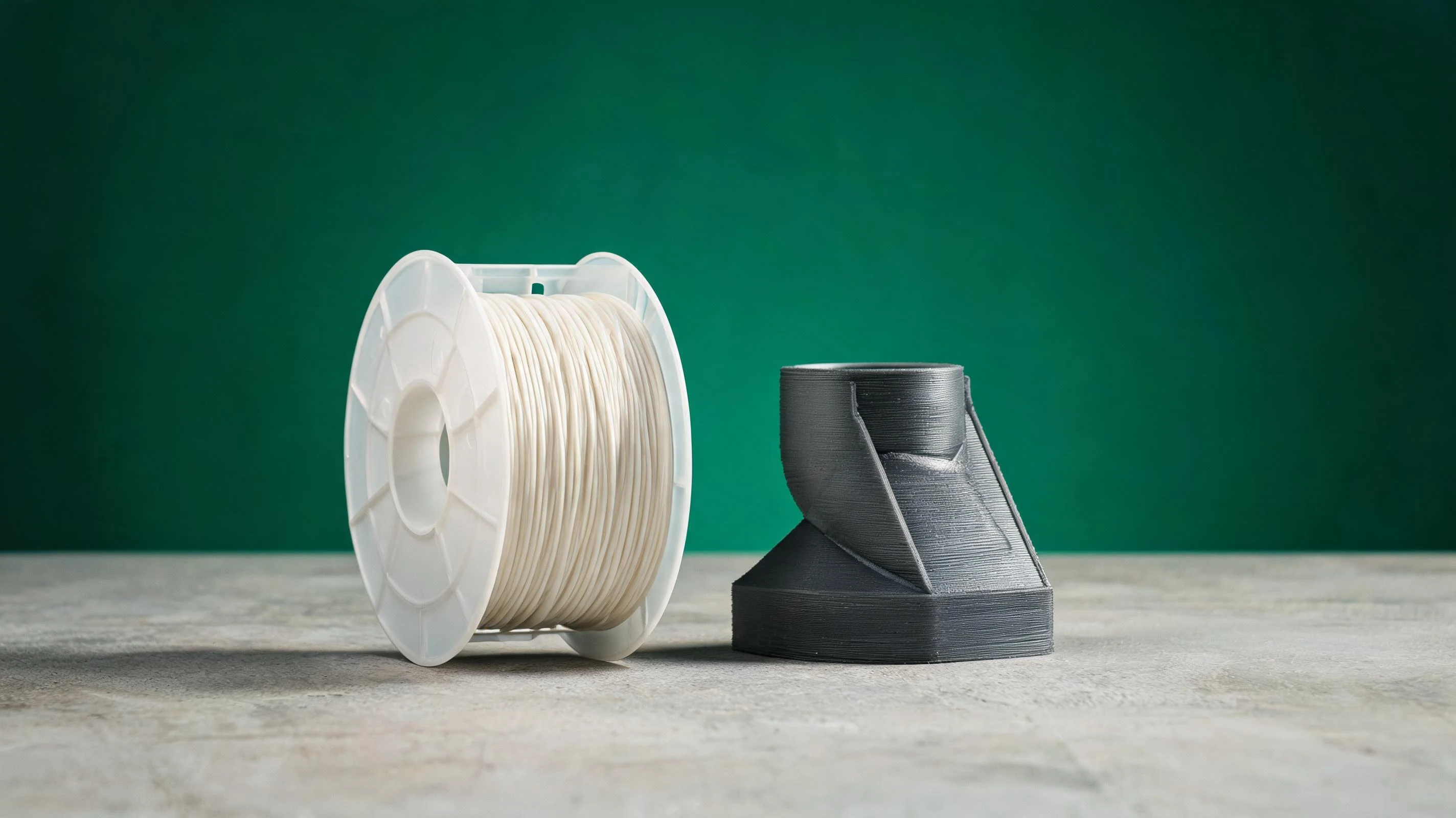
What makes PP different from the workshop staples
PLA and PETG are forgiving because they were designed to be printed. PP comes from injection moulding and extrusion, where the material is pushed through a heated barrel at speed and then held under pressure while it cools. Printing flips that: thin layers, no pressure, fast cooling. The result is shrinkage stress that pulls parts off the plate and warp that accumulates with height.
The practical consequences are well known to anyone who has tried a generic PP spool: bed adhesion is the first fight, warping is the second, and dimensional accuracy after cooling is the third. Compounds developed for printing attack all three at once, by tuning the polymer and the additives rather than by changing the printer.
What has changed in the supply chain
Three shifts are visible from where we sit, compounding PP in Dongguan:
- Grades are being purpose-built. Instead of one general PP, buyers now ask for low-shrink, high-impact or chemical-resistant variants, each with its own processing window.
- Printing has moved from prototyping to production parts. Jigs, ducts, housings and replacement components are being printed in PP because the material survives the environment the part lives in.
- Material suppliers are being asked for data, not just spools. Print parameters, shrinkage behaviour and batch consistency matter as much as price when a printed part goes into a production line.
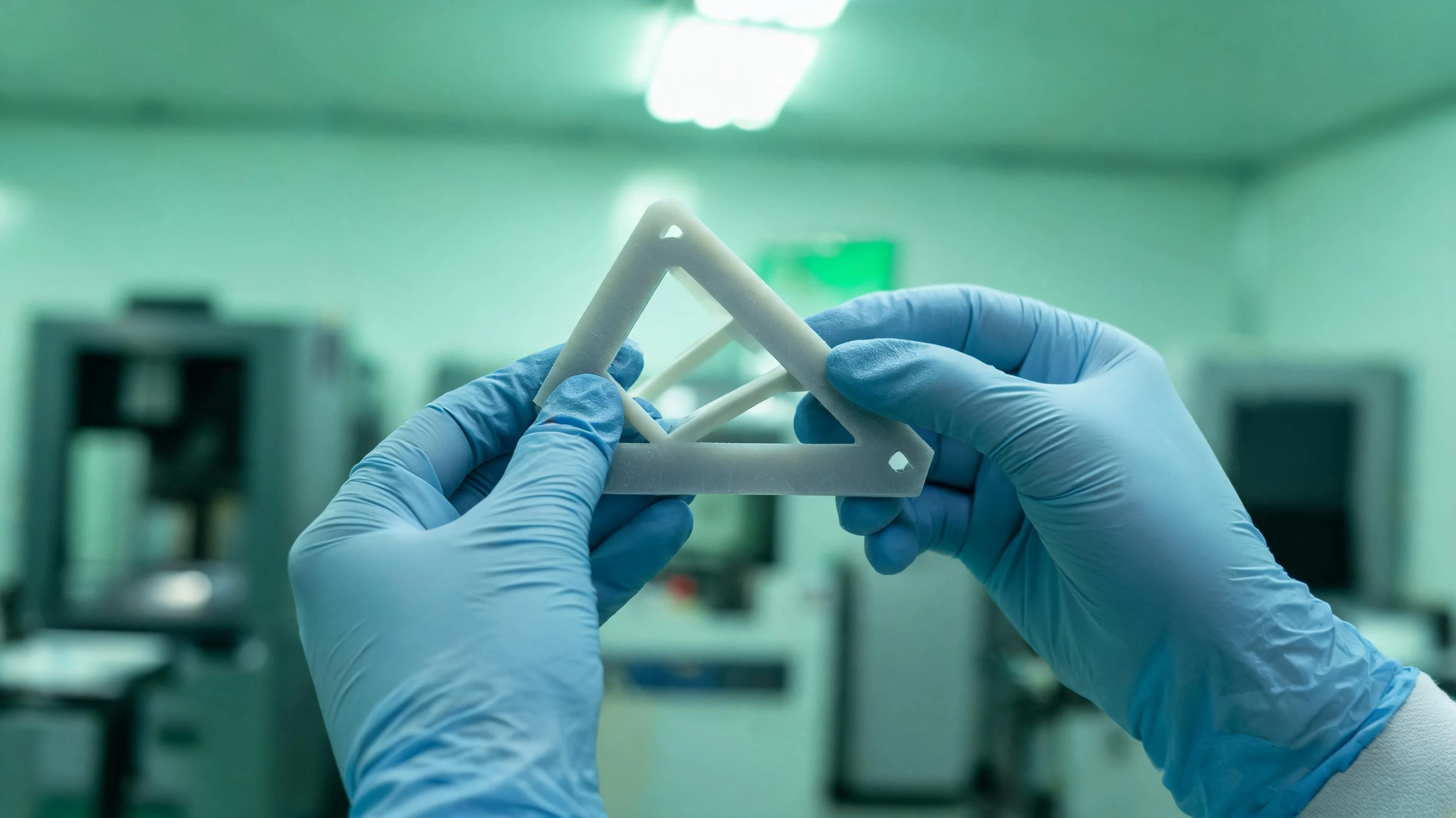
Where industrial users are putting PP parts
The applications we quote most often share one trait: the part meets chemicals, moisture or repeated flexing, and metal or PLA is the wrong answer.
- Chemical and process equipment — guards, ducting, tank fittings and fixtures used around acids, alkalis and solvents.
- Automotive and transport — ducts, brackets and covers where low weight and chemical resistance matter more than surface finish.
- Handling and packaging lines — wear parts, guides and lids that flex thousands of times without cracking.
- Replacement parts — low-shrink PP printed to fit a machined component that is still in service.
PP against the materials most workshops already stock
| Property | PP | PLA | PETG | ABS |
|---|---|---|---|---|
| Chemical resistance | High | Low | Medium | Medium |
| Moisture uptake | Low | Medium | Medium | Medium |
| Flexibility / hinge use | High | Low | Medium | Medium |
| Printing difficulty | High | Low | Low | Medium |
| Best fit | Chemical, flexing and light parts | Models and prototypes | Functional and outdoor parts | Stiff engineering parts |
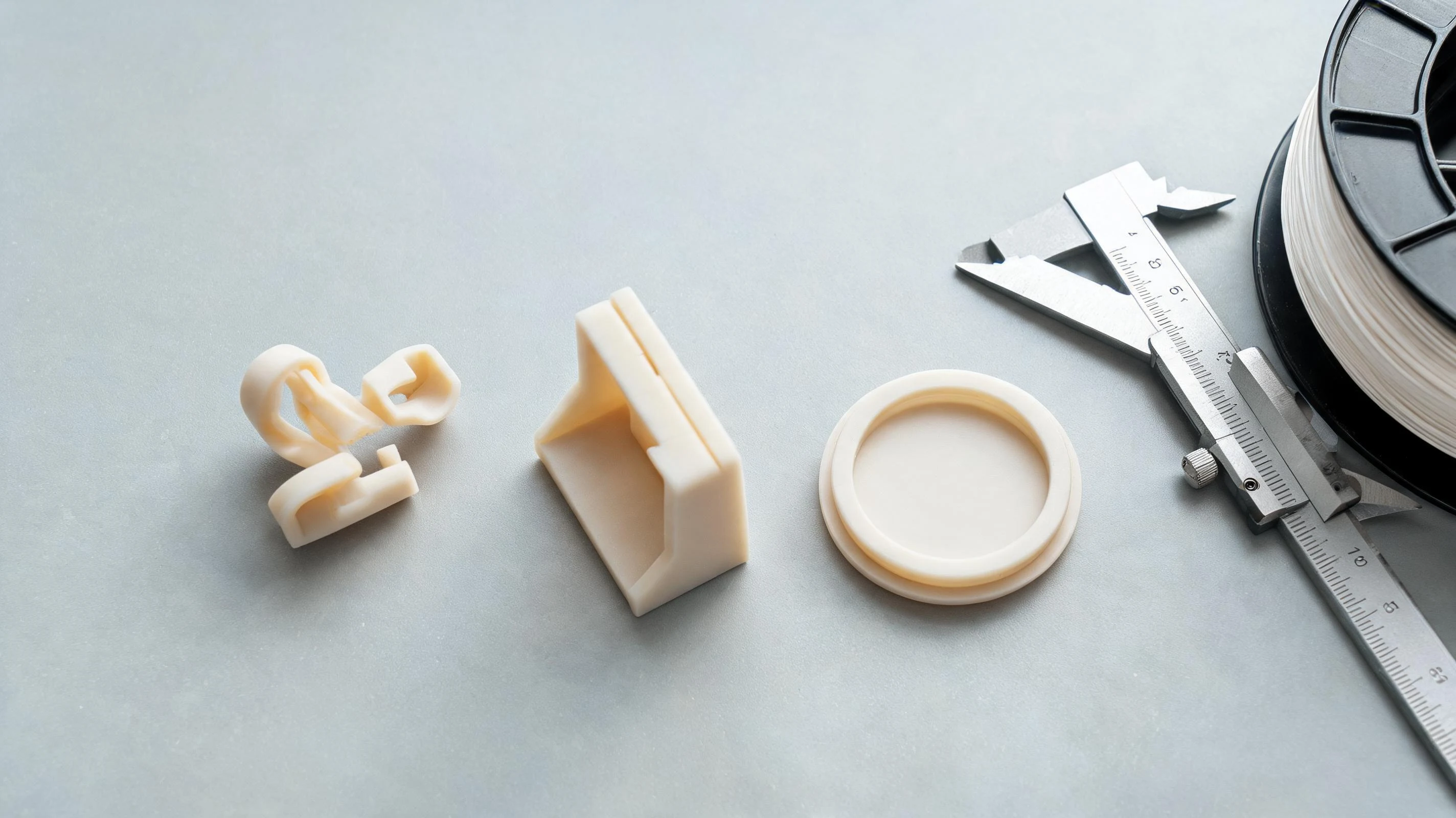
How to specify a PP grade without guesswork
The single most useful thing a buyer can send is the working condition, not a material name. A few questions shorten the conversation considerably:
- What does the part touch — which chemicals, at what concentration, for how long?
- Does it bend in service, or does it have to hold a dimension against another component?
- What surface finish and colour does the end user see?
- Which printer and enclosure will run it, and who owns the process settings?
From those answers we pick between the six PP options in our range — general purpose, chemical-resistant, low-shrink, high-impact, natural and fully custom compounds — and send the datasheet with the processing window that matches.
Our PP range
- PP Standard — general-purpose grade with low moisture uptake.
- PP Chemical-Resistant — formulated for acid, alkaline and solvent exposure.
- PP Low-Shrink — for assemblies where a printed part must meet another component.
- PP High-Impact — living hinges, clips and latches.
- PP Natural — unpigmented base for painting and welding.
- PP Custom Compound — formulation developed against your application.
This note is written from our own compounding and printing experience rather than from published statistics. Grade-specific data — processing window, shrinkage, mechanical values — is supplied with the datasheet on request.