
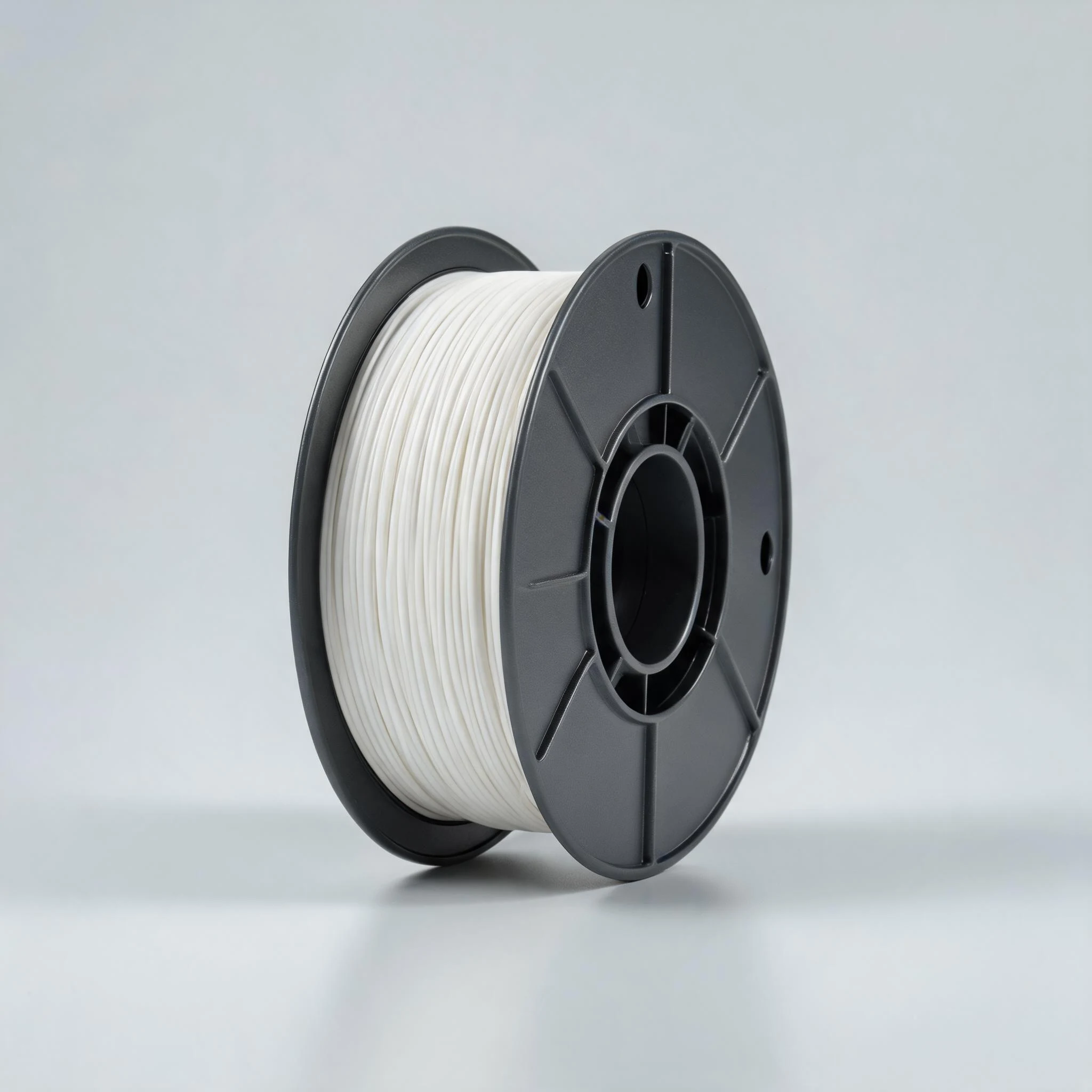
PP is the material our plant was built around: we compound polypropylene in-house, then draw it into 1.75 mm filament for FDM printers. This note is the plain-language version of the PP series page — what the material is, which of the six grades fits which job, what arrives on the spool, and how a first order usually runs.
This note covers the six compound grades. The series now also runs three tiers — PP, PP+ and PP+ Pro — and two application lines, PP Guard and PP Medical Guard, for protective gear and orthopaedic braces.
What PP filament is, in printer terms
Polypropylene is a semi-crystalline polymer: light for its strength, chemically inert, and able to flex many thousands of times without cracking. Those are the properties engineers want for ducts, tanks, lids, hinges and clips. They are also the properties that make the material awkward on an FDM printer, because a semi-crystalline polymer shrinks as it crystallises and pulls the part with it.
Compounding is how that is handled. Instead of one generic PP, we adjust the polymer and the additive package so a grade is predictable on a printer: a lower and more even shrinkage, a surface that grips a build plate, and a processing window wide enough to hold a tolerance. The printer does not change; the spool does.
The six grades and what each one is for
All six are PP, and all six are compounded by our own material team. The difference is the working condition they are formulated against.
| Grade | Built for | Typical part |
|---|---|---|
| PP Standard | General purpose, low moisture uptake | Containers, light structural parts, wet environments |
| PP Chemical-Resistant | Acid, alkaline and solvent exposure | Process equipment guards, ducting, tank fittings |
| PP Low-Shrink | Dimensional fit against another component | Brackets and replacement parts that must meet a machined mating face |
| PP High-Impact | Repeated flexing without cracking | Living hinges, clips, latches, lids |
| PP Natural | Unpigmented base for painting, welding or hidden parts | Frames, internal fixtures, parts to be welded |
| PP Custom Compound | Formulation developed against your application | Parts where standard grades cannot reach the requirement |
What arrives on the spool
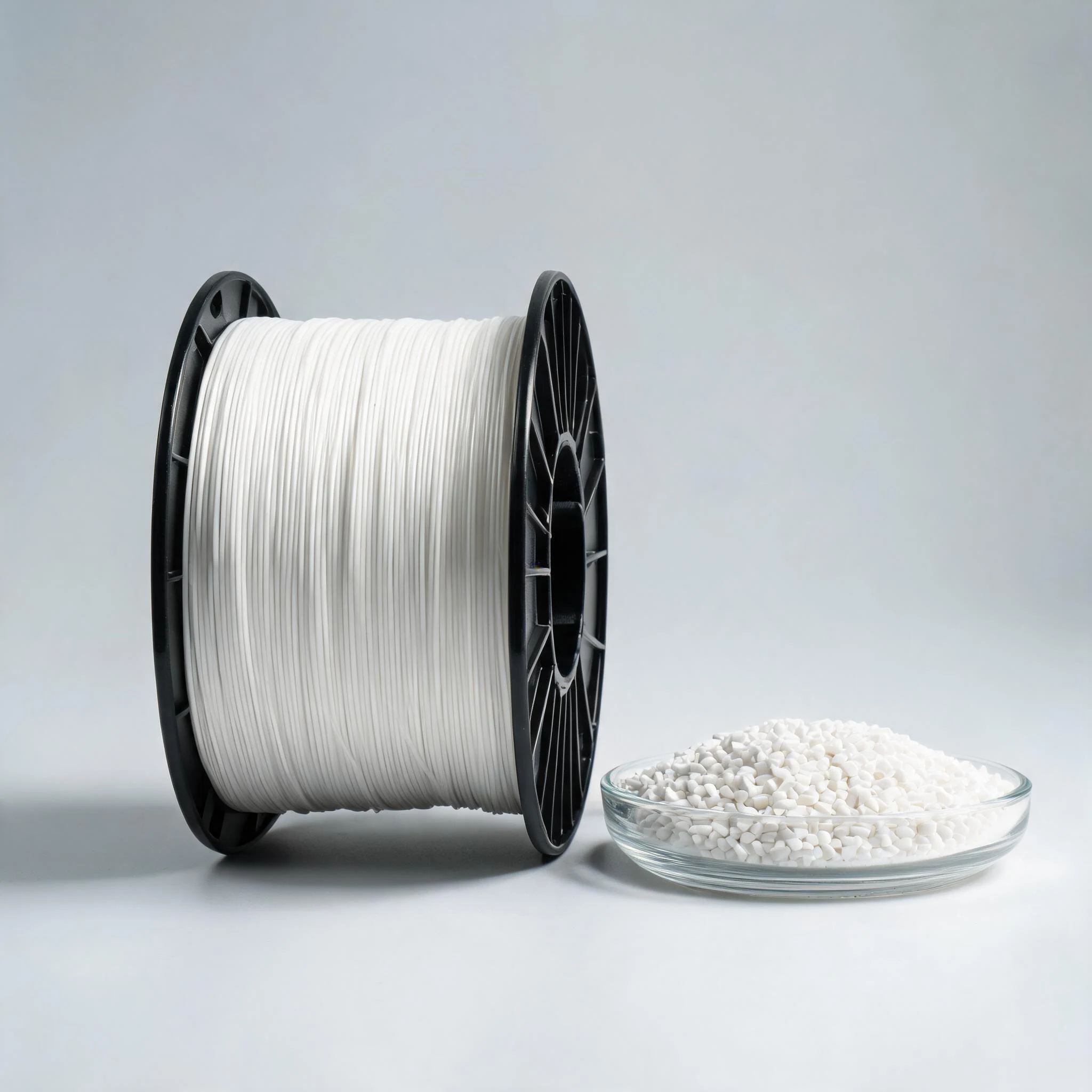
The packing and the dimension are the same across the range unless you specify otherwise, which keeps the printer side of a project simple.
| Material | PP (polypropylene), compounded in-house |
|---|---|
| Diameter | 1.75 mm, ±0.03 mm tolerance |
| Spool weight | 1 kg |
| Winding | Tangle-free, consistent tension |
| Colour | Natural and standard colours; custom colour per order |
| Packing | Individual spool or bulk carton; own-brand packaging available |
| Technical data | Datasheet with printing window and mechanical data on request |
Printing PP without fighting it
PP is not PLA, and the settings that suit PLA make it worse. The four points that matter most in practice:
- Dry the spool. PP takes up little moisture compared with PETG, but it is not zero — a wet spool shows as popping and inconsistent extrusion.
- Grip the build surface. PP does not bond to most surfaces used for PLA. A surface dedicated to PP, or a suitable adhesive film, is usually the difference between a finished part and a peeled one.
- Hold the heat in. An enclosure keeps the cooling rate even, which reduces warp and helps layer adhesion.
- Allow for shrinkage in the model. Even on a low-shrink grade, the CAD model should carry a scale allowance rather than the printer chasing a dimension.
The exact nozzle, bed and chamber values for each grade come with the datasheet, because the right window differs between Standard, Low-Shrink and High-Impact. We would rather send the numbers for the grade you actually run than publish one window that fits none of them.
Where PP parts usually end up
- Chemical and process equipment — guards, ducting, tank fittings and fixtures around acids, alkalis and solvents.
- Packaging and handling lines — guides, wear parts and lids that flex on every cycle.
- Automotive and transport — ducts, brackets and covers where low weight matters more than surface finish.
- Replacement parts — a printed PP component fitted to equipment already in service.
For how those applications are developing, see the companion note on why PP filament is moving into industrial 3D printing.
Ordering: a spool, a trial batch or a custom compound
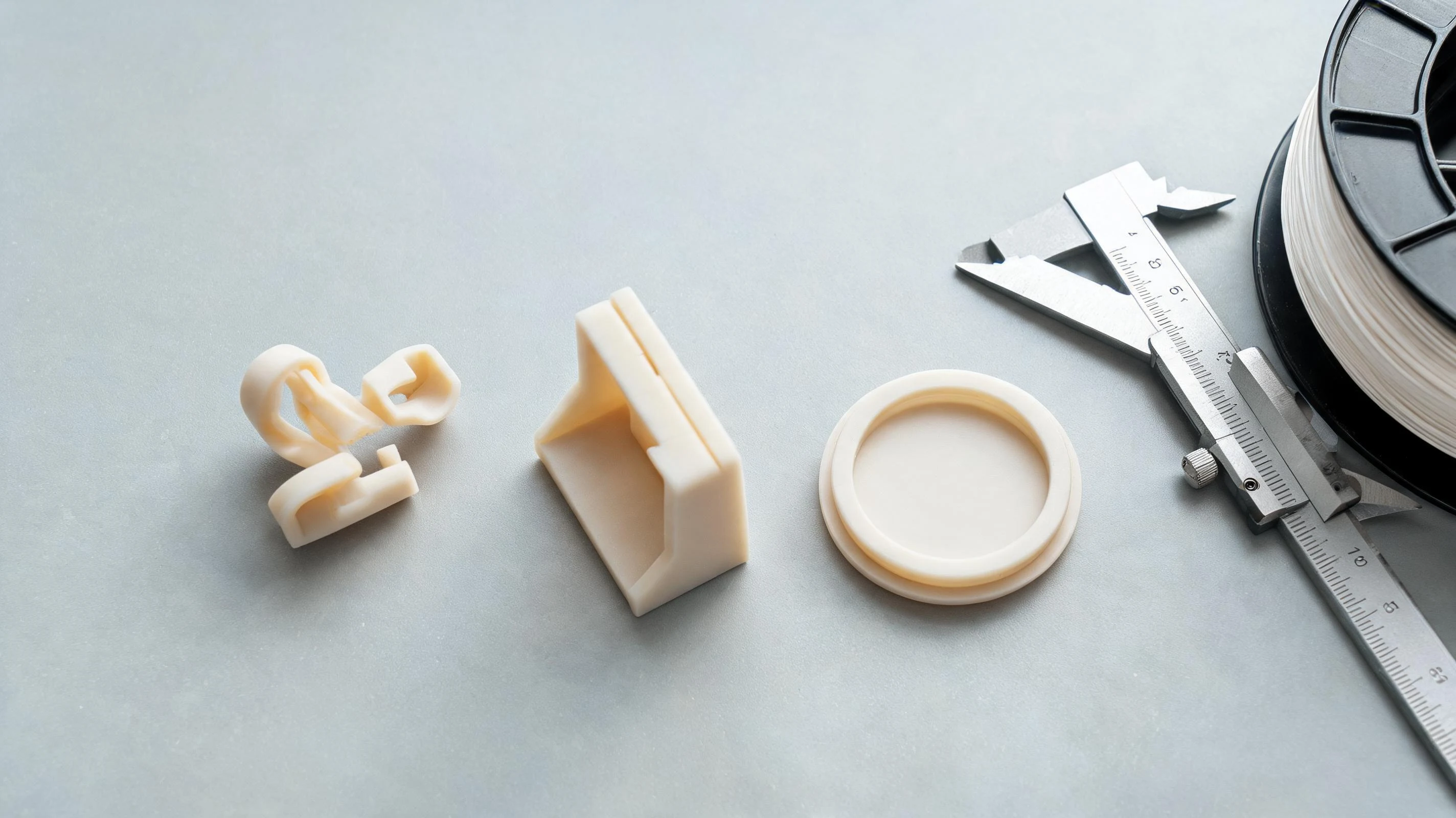
Most first orders start with one or two spools of a standard grade to confirm the process on your own printer, then move to a batch once the part is signed off. From there the order can carry custom colour, custom packing and own-brand labels — all handled in our plant in Dongguan, including OEM/ODM runs.
If none of the six grades reaches the requirement, the custom compound route is the one to take. We ask for the working condition first — what the part touches, whether it flexes, what tolerance it has to hold — and develop the formulation against that.
This note describes our own range and our own compounding experience; it is not a substitute for the datasheet. Grade-specific data — processing window, shrinkage behaviour, mechanical values — is supplied on request.